LED Wall Rental Guide: How to Choose Pixel Pitch, Panel Size, Processing, Rigging and Power
"We need a 20-foot LED wall" is where most LED conversations start. It is almost never enough to build an accurate quote. Two walls of the same size can differ by thousands of dollars and several hours of load-in, depending on the panel, the processing, how the wall is supported and how it is powered.
This guide walks through the decisions that shape an LED wall rental, in the order a production team should make them. It's written for producers, AV companies and technical directors who want to send a request that can be quoted properly on the first pass.
What Determines an LED Wall Package
An LED wall is a system with five parts, not a single product:
The display surface. Panel model, pixel pitch, cabinet size and brightness.
Processing and signal. The LED processor, any switching, and how signal gets from front of house to the wall.
Structure. Ground-stacked or flown, plus the hardware that goes with each.
Power and data distribution. Circuits, distro, data cabling and backup paths.
Spares and support. Extra cabinets, modules, cables and, if needed, a qualified LED technician.
When quotes vary widely, it's usually because one vendor included all five parts and another quoted only the panels. When you compare, compare complete packages. You can browse the display side of our inventory on the video rentals page.
Pixel Pitch and Audience/Camera Distance
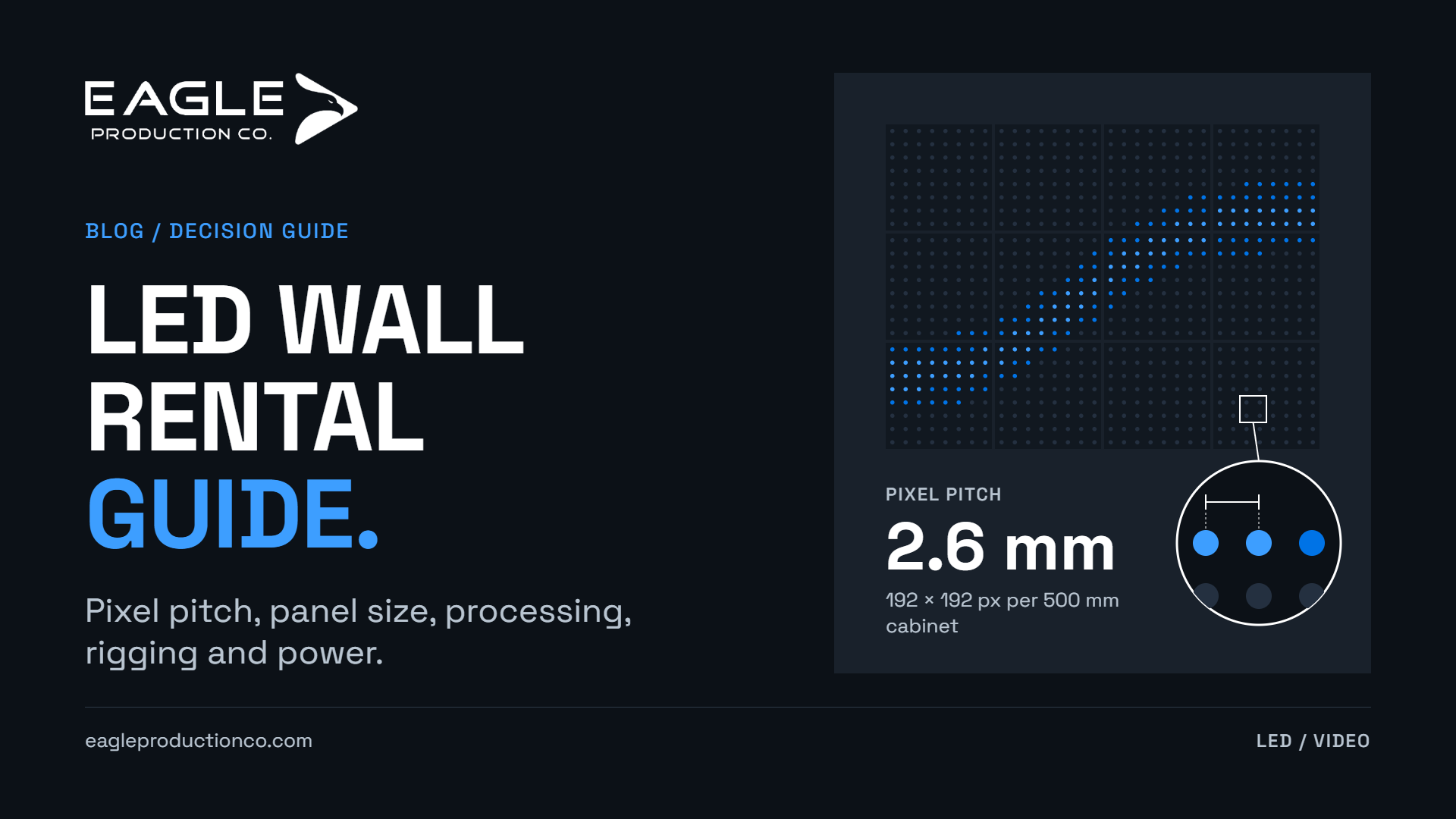
Pixel pitch is the distance, in millimeters, between the centers of neighboring pixels. A smaller number means pixels are packed more tightly, which gives more resolution for the same physical size and a cleaner image up close.
A widely used rule of thumb says the closest comfortable viewing distance in meters is roughly equal to the pitch in millimeters. By that rule, a 2.6 mm wall looks smooth from about 2.6 m (8 to 9 ft), and a 3.9 mm wall from about 4 m (13 ft). The ideal viewing distance is usually several times further back. Treat these as starting points, not hard limits.
Pixel pitchTypical fit1.9 mm and belowClose-up broadcast, small boardrooms, product reveals2.6 mmCorporate general sessions, keynotes, camera-facing stages, premium expos3.9 mmLarger ballrooms, concerts, audiences seated further back4.8 mm and aboveOutdoor events, festival IMAG, long viewing distances
Cameras change the calculation. If the wall appears behind presenters on a broadcast or livestream, a finer pitch together with good processing helps reduce moiré and scan lines on camera. Tell your rental partner early if cameras will frame the wall tightly.
Cabinet Format, Wall Dimensions and Native Resolution
LED walls are built in whole cabinets, so you can only choose sizes in cabinet increments. Most rental panels use a 500 mm module, which makes 500 × 500 mm and 500 × 1000 mm cabinets common.
Each cabinet has a fixed pixel count, and the wall's native resolution is the number of cabinets wide multiplied by that count. At 2.6 mm, a 500 mm cabinet edge holds 192 pixels. A wall 16 cabinets wide and 9 cabinets tall is therefore 8 m × 4.5 m (about 26'3" × 14'9"), with a native resolution of 3072 × 1728. The same physical wall built from 3.9 mm product is only 2048 × 1152.
This matters for content. Graphics should be built to the wall's native pixel canvas, not assumed to be 1920 × 1080. Send your content team the canvas size as soon as the wall design is locked.
Indoor vs Outdoor Conditions
Indoor and outdoor LED products are built for different jobs. Indoor panels are designed for controlled environments. Outdoor panels add weather sealing (check the IP rating) and much higher brightness to compete with daylight.
For outdoor or semi-outdoor events, plan for:
Direct sun and ambient light
Rain and wind exposure, including wind loading on the structure
Temperature swings
Whether the processing and power distribution can be kept dry
A covered pavilion or open-sided tent is not the same as an indoor room. Tell your provider the real site conditions so they can recommend the right product.
Switching, Processing and Signal Transport
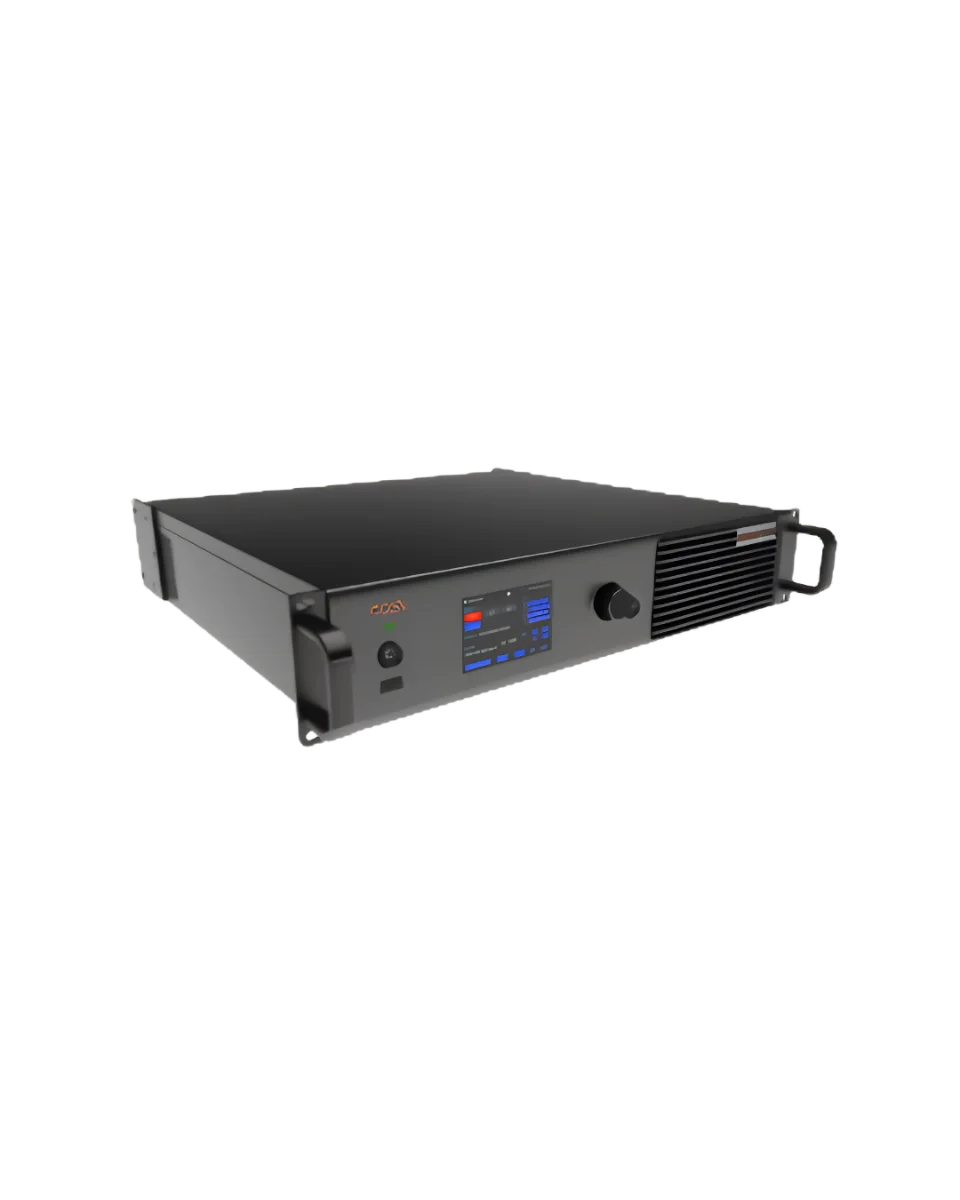
The LED processor is the translator between your sources and the panels. It maps content to the physical layout of the cabinets, scales the image, manages color and brightness, and sends data out to the wall. Each processor has a total pixel capacity and a per-port limit, and those two figures decide how many processors and data runs a wall needs.
Upstream of the processor, you may need a switcher to handle multiple sources (presentation laptops, cameras, playback) and a way to transport signal over distance. Fiber is standard when front of house is far from the stage. See our video control rentals for the processing side of a package. For a detailed look at one flagship processor, read our NovaStar MX40 Pro guide.
Ground-Supported vs Professionally Engineered Flown Systems
Ground-supported (stacked) walls sit on a base with rear bracing and ballast. They are often faster to deploy and don't need rigging points. They do use stage depth, need a level, load-rated surface, and have practical height limits.
Flown walls hang from header bars on motors or fixed points. They keep the floor clear and allow larger, higher walls. They also require:
An engineered rigging plan
Venue approval of the points and loads
Qualified riggers to install it
Some rental panels are rated for considerable hang heights. INFiLED, for example, rates its RS series for flown installation within defined safety factors. Those ratings only hold when the rigging is designed and installed by professionals. See our rigging rentals for truss, motors and ground-support hardware.
Power, Data, Redundancy and Spares
LED walls draw a lot of power at full white and much less on typical content. Plan circuits around the maximum published draw, not the average. The wall should have its own dedicated distribution rather than sharing circuits with lighting or catering.
Data redundancy means running backup data paths so a single failed cable or port doesn't black out part of the wall. Processors that support hot backup between ports make this simple to build in.
Always carry spares: extra cabinets, modules, receiving cards, and power and data jumpers. A dead module in the middle of a keynote is fixable in minutes if the spare is on site. Browse power rentals for generators, distros and cable, or read our guide to event power distribution for AV productions.
LED Wall Quote Checklist
Send these details for the fastest, most accurate LED wall quote:
Event dates, load-in and load-out windows, and venue name
Target wall size (or the space available) and aspect ratio
Closest and furthest audience distances
Whether cameras will shoot the wall, and how tightly
Indoor, outdoor or covered-outdoor conditions
Ground-stacked or flown, and whether the venue has approved rigging points
Number and type of sources, and where front of house sits relative to the stage
Available venue power, or whether generation is required
Whether you need an LED technician or a dry-hire package
Content resolution requirements, if already set
Request a Complete LED Wall Package
Eagle Production Co. supplies LED walls as complete systems: panels, processing, structure, power and spares, scoped to your room and your show. We can also provide production support when you need an experienced LED technician on site. Contact our team with your event details to request a complete LED wall package.