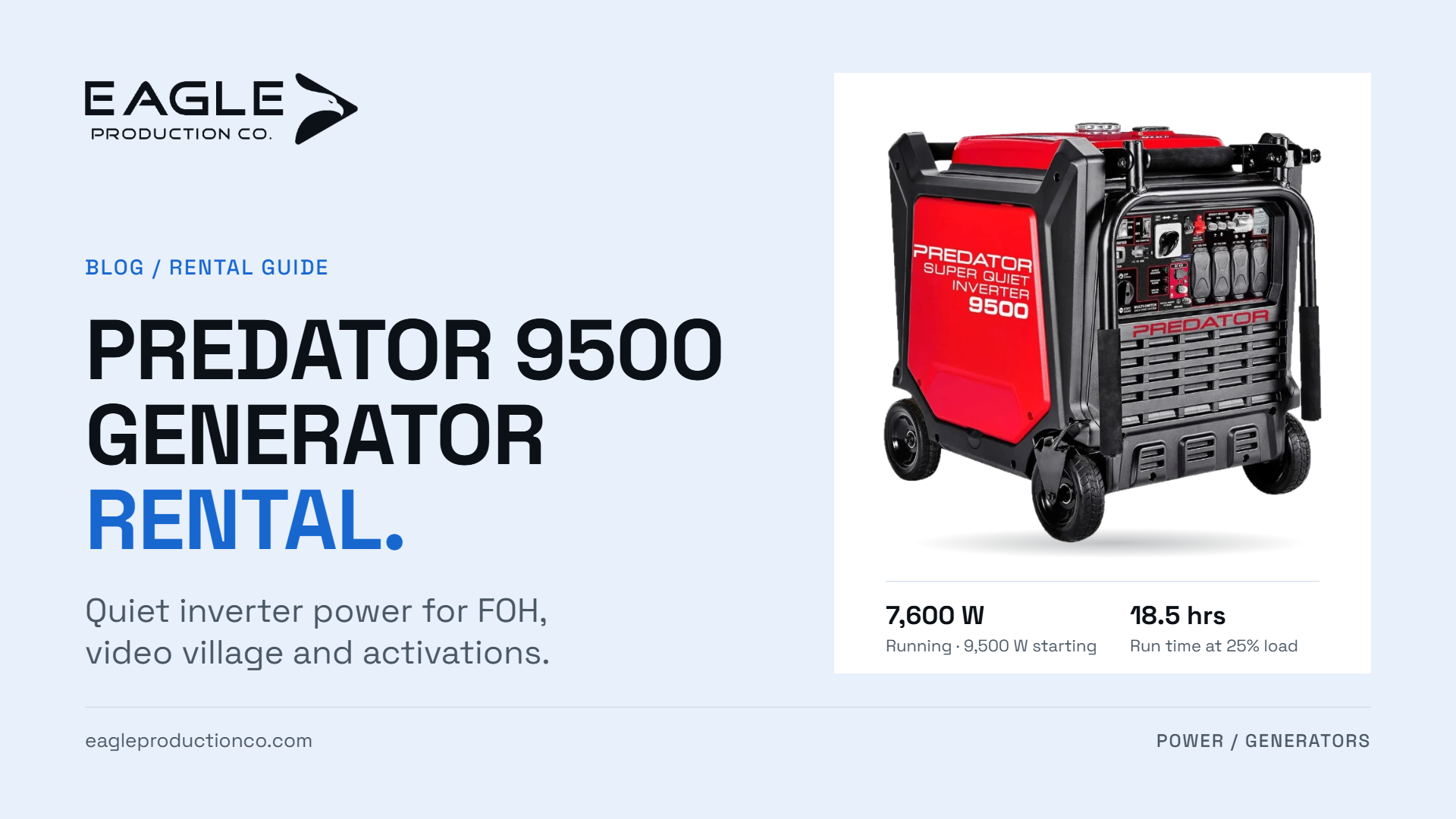
Predator 9500 Inverter Generator Rental: Quiet Power for Production Teams
Q4 puts a lot of shows where the house power isn't. Brand activations in parking lots, outdoor registration tents, sponsor villages, broadcast positions at the edge of a field. Most of those jobs don't need a tow-behind diesel and a full distro. They need a few clean, quiet circuits in the right spot for the whole day. That's the job a Predator 9500 inverter generator rental does well, and it's why our Predator 9500 inverter generator page has become one of the most visited pages on our site.
This guide is for production companies, AV houses and event producers deciding whether it belongs on the next order.
What the Predator 9500 is
The Predator 9500 Super Quiet Inverter Generator is a portable, wheeled unit rated at 9,500 starting watts and 7,600 running watts. These are the features that matter on a show:
Pure sine wave inverter output. Power is clean and stable, which is what consoles, wireless receivers, LED fixtures, laptops and displays expect.
Long run time. Up to 18.5 hours at 25% load from a 6.8-gallon tank, so a light load can cover a full show day without a refuel.
Electronic Speed Control mode. The engine throttles to the load instead of running flat out, which keeps noise and fuel use down when the draw is light.
CO SECURE. The unit shuts itself off if it detects harmful levels of carbon monoxide.
120V and 240V outlets. GFCI-protected 120V receptacles plus a 120/240V 30A outlet, with electric start.
Four wheels and a folding handle, so it moves across a lot or loading dock without a forklift.
It is not a replacement for a tow-behind generator. 7,600 running watts won't run a main PA, a large LED wall or a full lighting rig. It's a spot-power tool, and a very good one.
Where it earns its place on a show
FOH and monitor positions away from house power. Outdoor stages often put front of house 100 feet or more from the nearest outlet. A quiet generator near the tent keeps the console, processing and wireless rack on their own clean circuit.
Video village and registration. Confidence monitors, laptops, badge printers and a 55-inch outdoor display for wayfinding or sponsor content are moderate loads that can share one generator, once your power lead has checked the numbers.
B-stages and breakout areas. A second stage across a venue lawn with a small mixer, wireless and a few fixtures often fits inside 7,600 watts.
Backup for a critical circuit. Some producers keep one on standby for the single circuit a show can't lose, such as the record feed or the stage manager's comms.
Load-in and strike. Work lights and charging stations before house power is live, or after it's cut.
Planning the power the right way
Power is not a DIY job, and nothing here replaces a qualified power technician or electrician. The right workflow looks like this:
Build a load list. List every device that will draw from the generator, with its rated wattage or amperage. Your crew chief or your audio and video leads usually own this.
Hand it to your power lead. A qualified professional decides whether a 7,600-watt unit is right, how loads split across outlets, and how the generator is placed, grounded and cabled.
Check the site rules. Venues, municipalities and fire marshals often have rules on generator placement, exhaust clearance and fuel storage. Your power lead or production manager confirms them before the show.
Plan the fuel. For a long day at higher loads, plan when refuelling happens and who does it. Never refuel a running or hot unit.
If the load list comes back bigger than this unit can carry, that's useful too. It tells you to step up to a tow-behind generator and proper distribution, and we can talk that through with your power lead.
Why rent it instead of buying
Buying a generator for a handful of outdoor dates a year means owning the maintenance, the storage, the fuel handling and the risk that it won't start on the morning it matters. Renting puts a checked, ready unit on your truck for the dates you need. It also lets you add a second unit for a busy weekend without carrying the cost for the rest of the year.
For AV houses, it's often the gap-filler. Your own generators are out on another job, and a client adds an outdoor activation at short notice. A dry hire covers the date without turning the job down.
Dry hire from Wall, NJ
Eagle Production Co. rents equipment dry: you get the gear, and your own crew runs it. Every generator is checked before it leaves our shop in Wall, NJ, and again when it comes back. You get the exact model on your order, not a substitute. Collect it from us, or we deliver across the East Coast.
If you haven't rented from us before, setting up an account takes three things: a signed rental agreement, a photo ID for the account holder, and a certificate of insurance or a card hold. Do it once, and every order after that is just dates and a gear list.
Q4 calendars fill fast, and generators are among the first things to go when outdoor dates stack up. Visit our dry-hire equipment rental page to check availability and request a hold on your dates, or call (732) 833-2453 to talk through your load list with a real person.