LED Wall vs Projector for Corporate Events: Which Display Is Right for the Room?
Few AV decisions shape an event as much as the main display. LED walls have become the default look for high-end general sessions, but projection is still the right answer in plenty of rooms. We rent both, so we have no reason to push you toward either one. Here is how to decide.
Quick Decision Summary
Choose an LED wall when:
The room has significant ambient light, or lighting can't be taken down
Cameras will shoot the display for IMAG, livestream or broadcast
You need a bright, high-contrast image in a room without much depth
The design calls for curves, shapes or a seamless set piece
Choose projection when:
The room can be darkened and there's enough throw distance
You need very large images on a tighter budget
You're mapping content onto scenic elements or unusual surfaces
Load-in time, weight or power are tightly constrained
Many shows use both, for example an LED center wall with projected side screens.
Brightness and Ambient Light
This is the biggest difference between the two. LED walls produce their own light and hold contrast even when house lights, daylight or stage washes are hitting the display area. A projected image is only as good as how dark the screen stays. Any ambient light that falls on the screen washes out the blacks.
If the venue has windows that can't be covered, a bright stage lighting design, or an audience that needs working light for notes, LED has a clear advantage. In a controlled, dark ballroom, a properly specified large-venue projector looks excellent.
Viewing Distance, Pixel Pitch and Resolution
With LED, resolution depends on the physical wall size and the pixel pitch. A small wall of coarse-pitch panels may have less resolution than you'd expect. With projection, resolution is fixed by the projector. A 4K-class projector puts the same pixel count on the screen whether the image is 12 or 30 feet wide.
For close viewers, a fine-pitch LED wall (around 2.6 mm) or a high-resolution projector both look sharp. For very large images seen from far away, projection can deliver the size at a lower cost. Our LED wall rental guide explains how pitch and distance relate.
Throw Distance and Room Layout
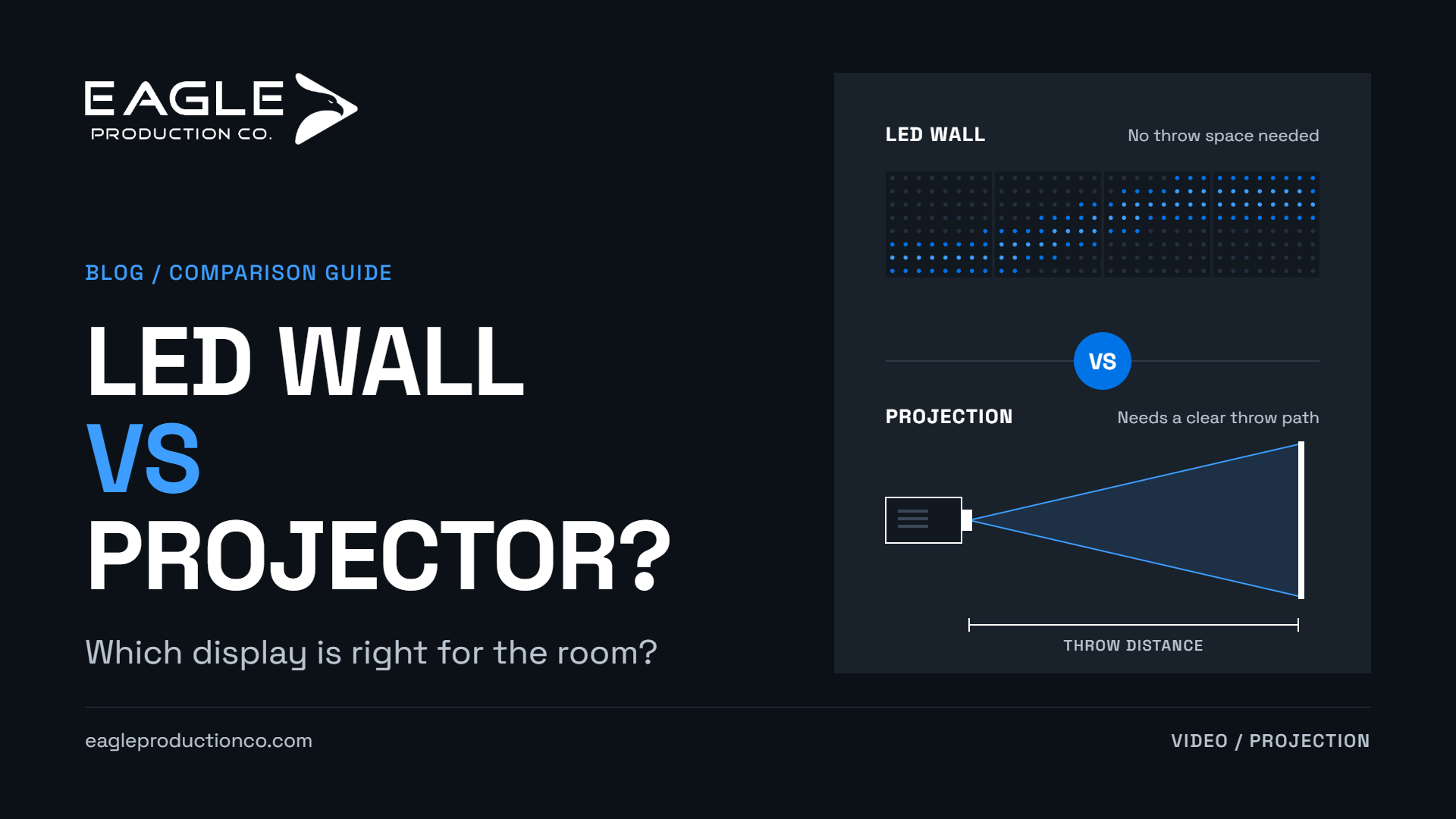
Projectors need a clear path to the screen. Front projection places the projector in or over the audience area, which takes up floor space or rigging points and affects sightlines. Rear projection needs depth behind the screen, often 10 feet or more depending on lens and image size.
LED walls need no throw space, only the depth of the structure. In rooms with low ceilings, limited depth behind the stage, or a layout where the projector position would block sightlines, LED often solves the problem.
Cameras, IMAG and On-Screen Performance
If the event is being filmed, livestreamed or shown on IMAG, the display will appear on camera. LED walls, run with processing that's set up for the cameras, hold up well in shot and give presenters a vivid backdrop. Projection screens behind presenters tend to look flat and washed out on camera, especially once stage lighting is raised enough to light faces properly.
For hybrid events, where the remote audience matters as much as the room, this factor often decides the choice.
Rigging, Floor Space, Power and Logistics
Weight and structure: LED walls are heavy. They need either ground-support structure or engineered rigging points. A screen and projector package is usually much lighter.
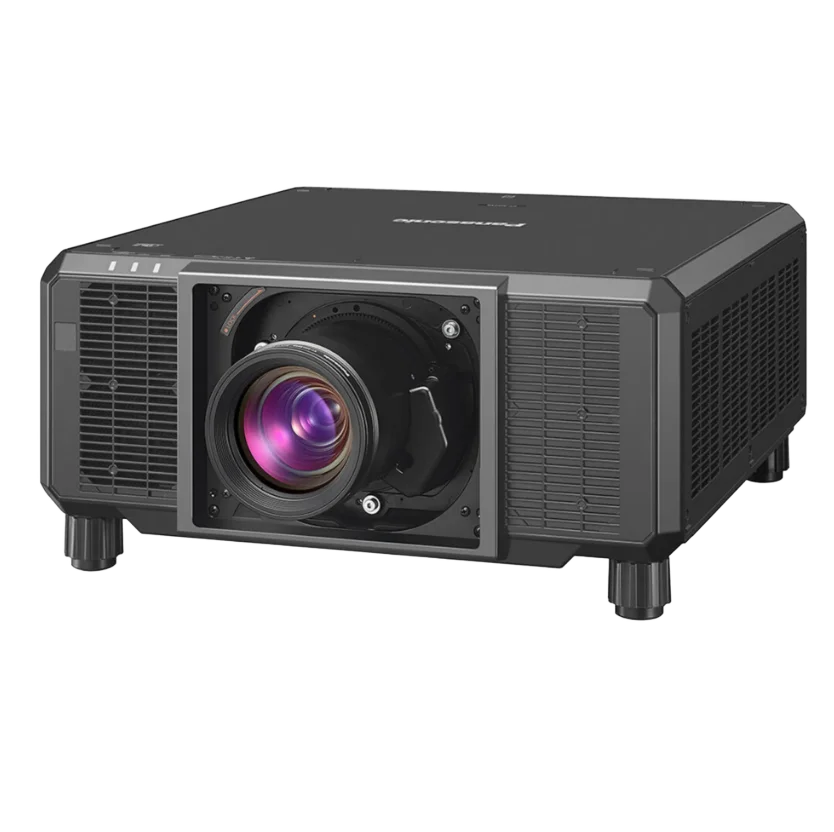
Power: LED walls draw substantial power at full brightness. Large-venue projectors need dedicated circuits too, but usually fewer of them. Panasonic's PT-RQ25K, for example, is a 20,000-lumen-class 4K projector that can still produce up to about 15,000 lumens on standard 100 to 120 V power. That flexibility helps when venue power is limited. Read our technical look at the PT-RQ25K.
Trucking and labor: a large LED wall takes more truck space and more crew hours than a projection package of similar size. Factor this into both load-in schedules and budgets.
Budget and Show-Duration Considerations
For very large image sizes, projection usually costs less per square foot. LED costs grow with wall area, especially at finer pitches, and bring related costs for structure, power and crew.
Show length and schedule also matter. A multi-day conference with full rehearsals spreads the LED investment over more show hours. A one-evening event in a dark room may not need LED at all. Consider the whole picture: equipment, labor, trucking, rigging and power.
Scenario Matrix: Ballroom, Expo, Outdoor Event and Touring Show
ScenarioUsually bestWhyHotel ballroom general session, lights controllableEither. LED if cameras or high production value matterProjection works in the dark; LED looks better on cameraBallroom with daylight or bright stage lightingLED wallContrast survives ambient lightExpo hall boothLED wallHigh ambient light, close viewers, no throw spaceOutdoor evening eventOutdoor-rated LEDWeather resistance and brightnessTouring corporate roadshowLED wallConsistent look across venues with different room conditionsLarge-image breakout or theater-style roomProjectionCost-effective size in controlled lightProjection mapping on scenic elementsProjectionMaps onto shaped and textured surfaces
Questions to Ask Before Choosing
Can the room be darkened, and how dark will it actually be during the show?
Will cameras capture the display, and is there a remote audience?
What is the ceiling height, and how much depth is there behind the stage?
Are rigging points available and approved?
How much power is available near the stage?
How long is the load-in window?
What image size is needed for the furthest seats?
Send Your Venue Details for a Display Recommendation
Eagle Production Co. rents both LED walls and video systems and large-venue projectors, so our recommendation follows the room, not our inventory. Send us the venue, room dimensions, lighting conditions and camera plan, and we'll recommend the right display format. Send your venue details.