L-Acoustics KARA II: A Technical Look at the Compact Line Source Built for Serious Coverage Control
For system engineers, audio techs, production managers, and AV teams, a line array box is never just about loudness. It is about coverage, consistency, rigging efficiency, prediction accuracy, weight, amplifier compatibility, throw, voicing, and how quickly the system can be deployed under real show conditions.
That is where the L-Acoustics KARA II earns its reputation.
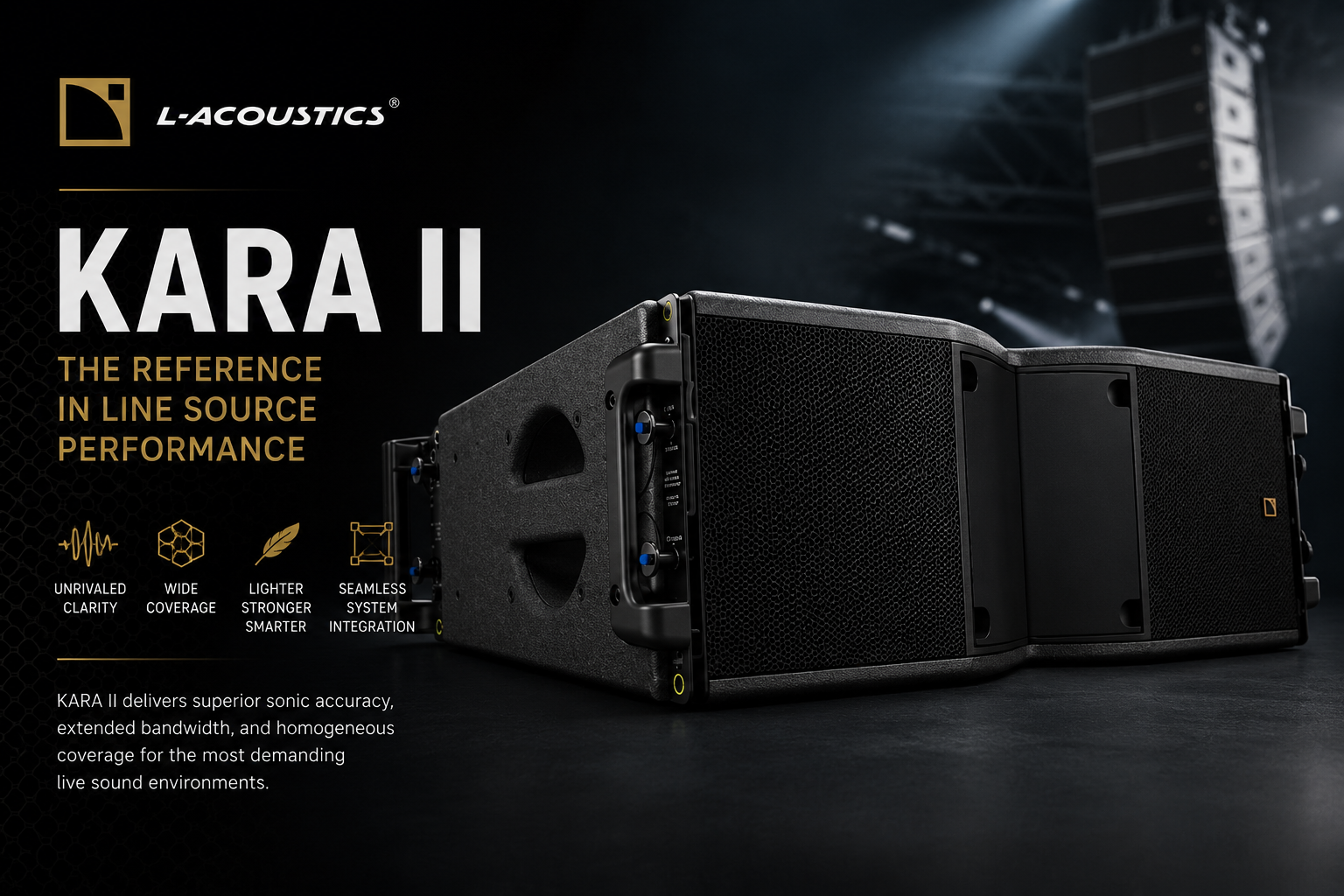
KARA II is a compact, variable curvature line source element designed for professional touring, corporate production, live music, houses of worship, broadcast events, festivals, and premium AV deployments. It sits in that useful middle ground where a system needs real throw and pattern control, but where a larger-format system may be too heavy, too visually dominant, or simply unnecessary for the scale of the job.
Officially, KARA II is a 2-way active, dual 8-inch line source enclosure with a 55 Hz to 20 kHz bandwidth, 142 dB maximum SPL, two 8-inch low-frequency drivers, one 3-inch high-frequency compression driver, and a cabinet weight of 26 kg / 57 lb. Its horizontal directivity is adjustable through L-Acoustics Panflex technology, offering 70°, 90°, and 110° coverage options depending on the application.
For audio nerds, the interesting part is not just the spec sheet. It is how those specs translate into deployment flexibility.
Compact Line Source, Real Output
The appeal of KARA II starts with its power-to-size ratio. A dual 8-inch enclosure that can deliver up to 142 dB SPL gives system designers a highly capable tool without stepping into the footprint of larger-format touring arrays.
That matters on events where coverage requirements are serious, but space and weight are still constraints. Think corporate general sessions, mid-sized concerts, ballrooms, theaters, outdoor stages, flown delay systems, VIP areas, production launches, and events where sightlines are just as important as SPL.
For rental companies and AV houses, this makes KARA II a versatile box. It is compact enough for a wide range of deployments, but powerful enough to serve as a main PA in many professional environments. It can also operate as a delay system, out-fill system, side-fill solution, or distributed line source where a smaller enclosure with controlled directivity is preferred.
For more professional audio rental options, you can browse Eagle Production Co.’s audio rental inventory here: https://eagleproductionco.com/rentals/audio
Panflex: The Feature That Makes KARA II So Useful
The defining feature of KARA II is Panflex.
Panflex allows the horizontal directivity of the enclosure to be adjusted mechanically. Instead of one fixed horizontal coverage pattern, KARA II gives system designers multiple options: 70° symmetric, 110° symmetric, and 90° asymmetric coverage, with steering available to the left or right depending on the deployment. L-Acoustics describes KARA II as offering 70°, 90°, and 110° horizontal directivity options, with 10° vertical directivity per element.
This is a big deal in real rooms.
A fixed-pattern line array forces the system designer to work around the loudspeaker’s native coverage. Panflex gives the designer more control over how energy is distributed horizontally. That means fewer compromises when dealing with wide audience areas, narrow rooms, reflective side walls, asymmetrical seating, balconies, VIP sections, broadcast cameras, stage geometry, and production scenic.
The 70° mode is useful when tighter horizontal control is needed. This can help keep energy off walls, reduce unnecessary spill, and improve intelligibility in more reflective spaces. The 110° mode is useful when broader coverage is needed, especially in wider rooms or near-field audience areas. The 90° asymmetric modes are especially helpful when the PA needs to cover uneven audience geometry without overfiring into unwanted areas.
For AV techs, that flexibility can reduce the need for extra fill boxes, complicated aiming compromises, or awkward array positions.
DOSC Waveguide and Line Source Behavior
KARA II uses L-Acoustics’ DOSC waveguide technology, which is central to the company’s line source approach. The goal is to create coherent high-frequency summation between elements so the array behaves predictably as a line source.
In practice, this matters because line arrays depend on the relationship between enclosure geometry, inter-element angles, waveguide behavior, and system prediction. If the high-frequency section does not sum properly between boxes, coverage becomes inconsistent and the system becomes harder to tune.
KARA II is designed to work as part of that L-Acoustics ecosystem, where the physical cabinet design, rigging angles, waveguide behavior, prediction software, amplified controllers, and presets all work together. That integration is one of the reasons L-Acoustics systems are so widely specified in professional production environments.
For the system engineer, the benefit is predictability. You are not just hanging boxes and hoping coverage works. You are designing a system with known parameters, manufacturer-supported presets, and a loudspeaker family built around consistent deployment behavior.
L-Vents and Low-Frequency Clarity
KARA II also includes L-Acoustics L-Vents, which are designed to improve low-frequency performance by reducing port turbulence and compression artifacts.
This matters because compact enclosures often struggle when pushed hard in the low-mid and low-frequency range. Port noise, distortion, and compression can make a system sound strained before it technically reaches its maximum level. A better vent design helps maintain cleaner output at higher drive levels.
For techs listening critically, this contributes to the box sounding more composed when pushed. Vocals, guitars, synths, playback tracks, and program material retain better clarity because the enclosure is not fighting as much mechanical noise or airflow turbulence in the low-frequency section.
Of course, KARA II is not a subwoofer replacement. For full-range concert or DJ playback, it will usually be paired with L-Acoustics subwoofers. But its usable bandwidth down to 55 Hz gives it strong low-mid body for a compact line source element.
Rigging and Deployment Efficiency
From a rental and production standpoint, rigging matters just as much as sound.
KARA II is built for road use, with a compact cabinet format and a 26 kg / 57 lb enclosure weight. That makes it practical for flown arrays, ground stacks, and deployment scenarios where the crew needs to move quickly.
The variable curvature line source format allows arrays to be shaped vertically according to the audience geometry. Inter-element angles are used to control vertical coverage and SPL distribution from front to back. Combined with Panflex horizontal control, KARA II gives engineers a high level of control over both axes of coverage.
That is especially useful in corporate and theatrical environments where the PA needs to sound powerful but remain visually clean. Smaller boxes mean cleaner sightlines, lower visual impact, and easier integration with lighting, video, scenic, and staging.
For larger shows, KARA II can also be useful as a delay or fill system alongside larger L-Acoustics main systems. Its voicing and ecosystem compatibility make it easier to integrate with other L-Acoustics products compared with mixing unrelated loudspeaker platforms.
You can explore Eagle Production Co.’s full rental catalog here: https://eagleproductionco.com/rentals
Amplified Controller Integration
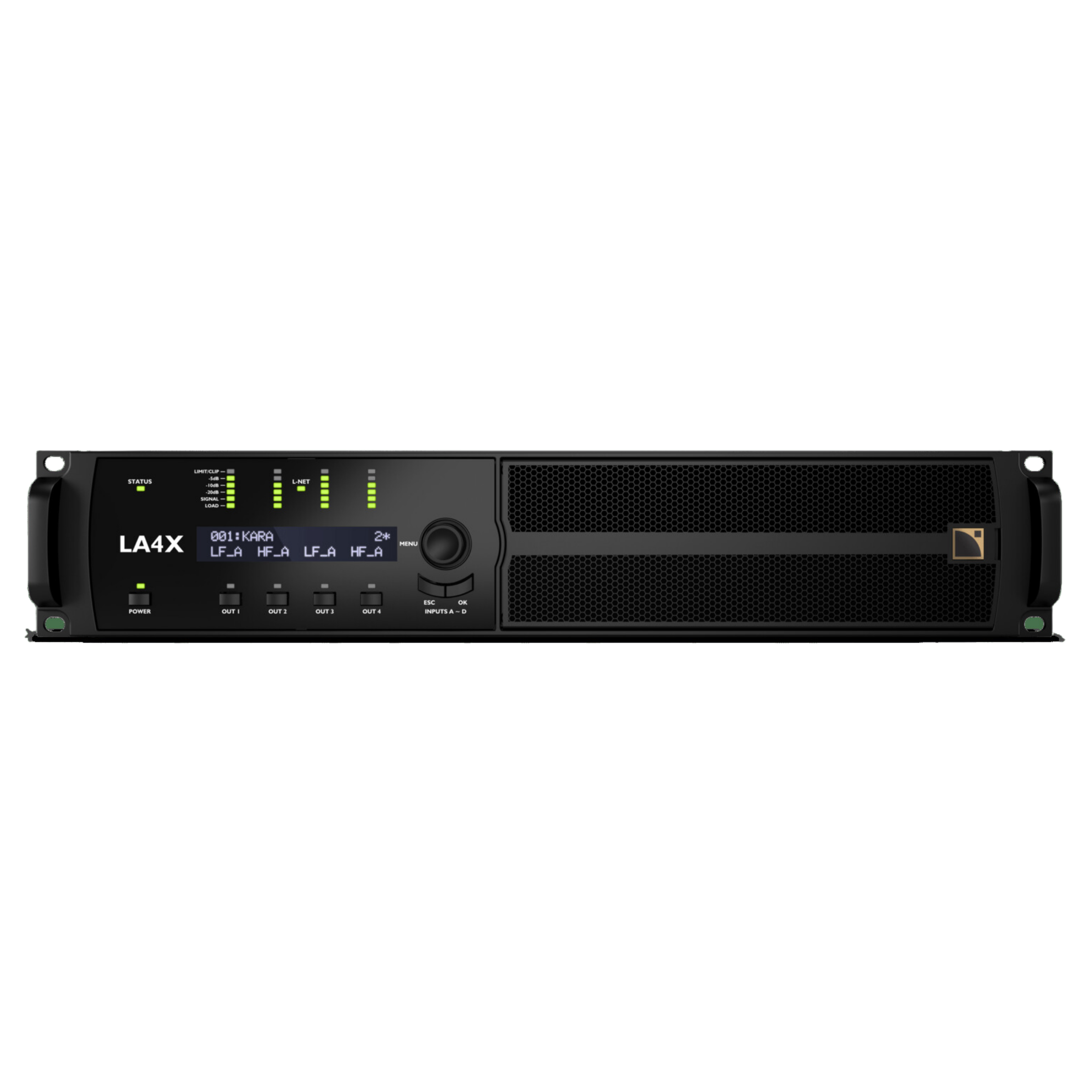
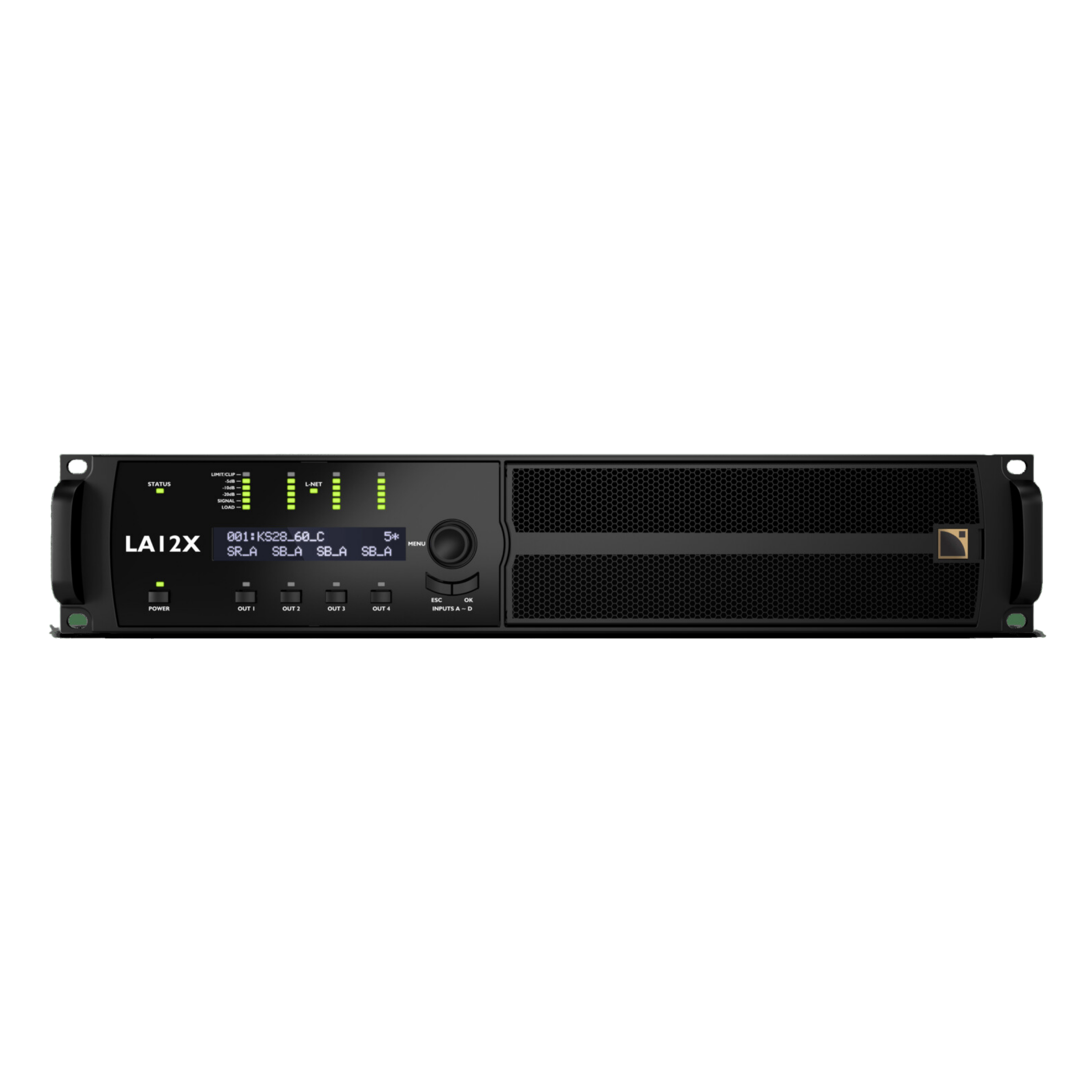
KARA II is designed to be used with L-Acoustics amplified controllers such as LA4X, LA8, and LA12X, depending on the system configuration. This is important because L-Acoustics systems rely heavily on the relationship between loudspeaker presets, amplifier channels, DSP, protection, and control software.
For AV techs, this makes the drive system part of the loudspeaker design. The amplified controller is not just providing power. It is delivering the correct processing, protection, routing, and monitoring for the loudspeaker.
In a rental environment, that consistency matters. When the correct controller platform, presets, and network monitoring are used, the system engineer has better visibility into load status, gain structure, limiter activity, temperature, and system behavior.
For larger deployments, pairing KARA II with properly configured L-Acoustics amplified controller racks helps keep the system standardized and easier to manage across multiple arrays, fills, and zones.
Where KARA II Makes Sense
KARA II is especially strong in situations where a compact enclosure needs to behave like a serious line source system.
It works well for corporate general sessions, live concerts, houses of worship, festivals, product launches, awards shows, ballrooms, theaters, broadcast events, fashion shows, and premium private events. It is also useful for front-of-house PA, delay hangs, out fills, side fills, and distributed systems.
The key advantage is flexibility. A production team can deploy KARA II in a tight room with controlled 70° coverage, a wider environment with 110° coverage, or an asymmetrical audience layout using 90° steering. That makes it easier to adapt one loudspeaker model to different venue conditions without changing the entire PA design.
For more L-Acoustics rental options, visit: https://eagleproductionco.com/rentals/l-acoustics
Final Thoughts
The L-Acoustics KARA II is a compact line source enclosure that gives system engineers a serious amount of control. Between its dual 8-inch active design, 142 dB maximum SPL, 55 Hz to 20 kHz bandwidth, DOSC waveguide, L-Vents, and Panflex horizontal directivity, it is built for productions where coverage and consistency matter.
For AV teams, the real value is deployment flexibility. KARA II can scale across event types, integrate into larger L-Acoustics systems, and solve coverage problems that fixed-pattern boxes often make more difficult.
If you are looking to rent the L-Acoustics KARA II for an upcoming production, you can find the product here: https://eagleproductionco.com/product/l-acoustics-kara-ii